Restoring the planet’s longest biodiversity corridor

Share

Pioneering Hope: Restoring Brazil’s Araguaya Biodiversity Corridor to Combat Climate Crisis

(This article was generated with AI and it’s based on a AI-generated transcription of a real talk on stage. While we strive for accuracy, we encourage readers to verify important information.)

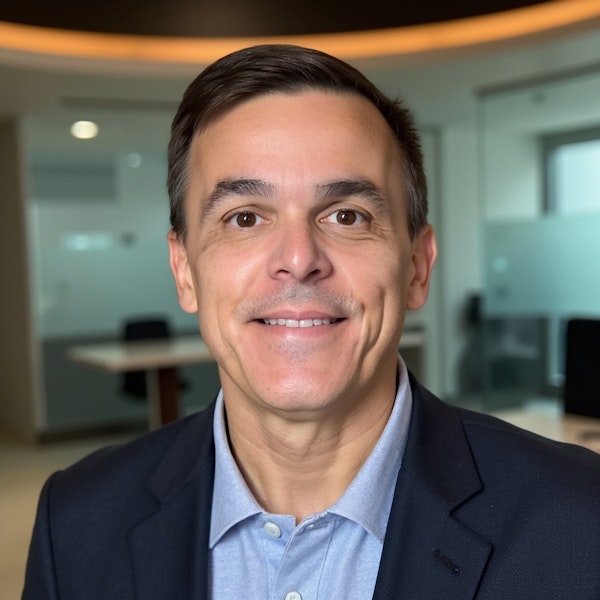
Constance Malleret

At Web Summit Rio de Janeiro 2026, Ms. Constance Malleret moderated a vital discussion on ecosystem restoration with Professor Carlos Nobre and Mr. Ben Valks. Professor Nobre, an Earth System Scientist and Nobel Peace Prize Laureate, highlighted the Amazon’s critical state, nearing a tipping point where it could become a net carbon emitter. He detailed extended dry seasons and increased tree mortality, alongside a one-degree Celsius temperature rise per decade in the Cerrado, stressing the urgency for large-scale restoration to meet Brazil’s goal of 12 million hectares by 2030.

Mr. Ben Valks, Founder & CEO of the Black Jaguar Foundation, introduced their ambitious mission: to establish the Araguaya biodiversity corridor, a “corridor of hope” and “action.” He affirmed that human effort can restore nature, despite the drastic climate crisis. This project is crucial, as the Araguaya River, one of Brazil’s largest, risks drying up within 30-40 years, threatening food, agriculture, and biodiversity. Mr. Valks asserted that global events like Web Summit depend on preserving nature, emphasizing the dire consequences of inaction.

The Araguaya corridor is a monumental undertaking, spanning 2600 kilometers in length and a minimum of 100 kilometers in width. The foundation aims to restore one million hectares exclusively with native trees, ensuring ecological integrity and long-term sustainability. This commitment to indigenous flora is crucial, avoiding non-native species and focusing on a comprehensive 17-step restoration methodology. They have established their own nurseries, planting teams, and the “Sementes do Araguaya” cooperative, employing over 135 local people to source seeds and foster local economic development. This holistic approach creates a “corridor of water” and generates over 20,000 green Brazilian jobs.

With a total budget of €7.4 billion, the foundation emphasizes that tree planting is just one component of the 17-step restoration process, requiring three years of dedicated maintenance for success. Mr. Valks underscored the “win, win, win” scenario for the environment, economy, and society, contrasting it with the “lose, lose, lose” outcome of inaction. Having operated for six years with “boots on the ground” action, the Black Jaguar Foundation seeks broader support, noting that the global cost of inaction, exceeding $17 billion, far surpasses the investment in restoration. He urged collective participation to safeguard vital ecosystems and ensure future global events.

Related
How to scale in LatAM in 2026

How to scale in LatAM in 2026

June 18, 2026 - 2 min read
Related
Beyond the bank account

Beyond the bank account

June 11, 2026 - 2 min read